January 25, 2015

Using Comedy to Cope

Playing with kids and puppies can brighten any day.
When I was in 4th grade I went through a phase where I was really into holocaust survivor autobiographies. I was transfixed by the different ways the holocaust victims were able to carry on through such immense hardship and go on to live relatively normal lives. (My obsession got to the point that my friends gave me a necklace that said “Morbid Freak.”) My love of grizzly true-life stories continues to this day, and may be one of the reasons I have been able to make it through my Peace Corps service relatively unscathed mentally.  

In the Peace Corps volunteers have to deal with a lot of depressing facts on a daily basis. We have students in the third grade who can’t read, neighbors who die young in motorcycle accidents, project partners who beat their children, etc.Some volunteers will get weighed down by the harsh reality surrounding them and choose to head back to the U.S. where they don’t have to confront these injustices on a daily basis (although they certainly still exist in the U.S.). Those of us who stay employ a variety of different coping mechanisms to help get us through the day. We all do what we can to improve the situation such as start tutoring programs and hold parenting classes. Many of us try to reduce our stress by exercising. Some, like me, try to remember worst things have and can happen. And at some point we will all try to find the humor in our experiences as volunteers. 

Here are the different types of humor volunteers use to distract us from reality: 

Ridiculousness - This can be employed when anything out of the norm happens. One just has to be able to recognize the absurdity of the situation and be able to laugh about it. One of my friends, Cory, has had to deal with maggots in random places in her house and unrequited lovers planting flowers in front of her house. She has a lovely laugh.

Mental health days at the beach are great.

 Only in the D.R. - Typically used to preface a comment about something that you hope does not occur elsewhere. Can be used as an excuse for culture clash volunteers can face. Example: “Only in the D.R. do citizens say that changing the constitution to allow the current President to run again isn’t a big deal because terrible politicians are always changing the constitution, and they might as well let a slightly good-guy change the rules for once.” Or, “Only in the D.R. can you let your twelve year-old child drive your car on the highway while you stand up through the sun roof drinking a 750 ml beer without fear of being arrested.”

Too True - When someone delivers news like it is a joke but there is no punch line, the sheer audacity of the statement is supposed to make it funny. Too true statements can often fall flat and are more commonly heard when people are drinking and the comedy bar has been lowered. I have made the following statement on several occasions and received laughs in response only because there isn’t much more you can say to the following: “My 70 year old neighbor asked me to be his lover.” 

Humor is definitely the most enjoyable coping mechanism, so if you know a volunteer send them a funny email or a link to a Buzzfeed listicle. I promise you it will make their day. To all the volunteers who make me laugh, you guys are the best. And to my sister Kelly, who always finds a way to make me smile, you are the most wonderful sister a gal could have! Thanks to everyone who has helped keep my spirits up the last 23 months – only four more to go!


January 15, 2015

Kids Say the Darndest Things

My Spanish has improved leaps and bounds since I arrived in the Dominican Republic. But the comments my students make are often so out-of-the-blue that I have to ask them to repeat themselves or elaborate. Here is a sampling of some recent conversations:
Collecting Cajuil Fruit

Student - Susan, how big is your property?
Me - My property? I just rent the house. I guess just the front yard.
Student - And is the Cajuil tree part of your yard? 
Me - Yes
Student - Can we go get some Cajuil fruit?
Me - Sure.

And thus I spent an extra few minutes after class collecting fresh fruit with my students.
***
Student - Susi, do you have a secret boyfriend?
Me - A secret boyfriend, why do you think I have a secret boyfriend?
Student - Because how can you not have a boyfriend! He lives in the capital, doesn't he? I am sure of it!
Me - No, sorry, if only.
Student - Fine be that way, I know you are lying!
***
First class with my new boy's youth group
Me - Okay boys, it is time to come up with the rules for your youth group.
Students whispering.
Me - What was that? I heard my name. Tell me what you all said!
Student - Wilberto says we should have a rule that says that none of us are allowed to fall in love with you.
Me - Fall in love with me?
Students nod heads.
Me - Well don’t worry boys I promise I will never fall in love with any of you. You all are a little too young for me anyways.
***
Student - I don’t believe you were in a fight?
Me - When was I in a fight?!
Student - Susi! Don’t pretend you don’t remember telling me!
Me - Oh, you mean the time when I was 10?
Student - Yeah!

This conversation then turned into my student demonstrating how she would have attacked a person who recently gave me some bad news.
***

I have the best students.

December 12, 2014

The Library Inauguration

"Susan, I am impressed. You are so calm right now." 

The room was already packed 30 minutes before we started
That is what a friend and fellow volunteer said to me as I walked, not ran, around completing last minute details for the community library inauguration which was to happen in under an hour. I attribute my part of my calm demeanor to my integration into Dominican culture. Nothing ever starts on time here, so me taking a few extra minutes to set things up wasn't going to ruin the event. Really though, nothing could ruin the event for me or the other member of the library committee. We had worked so hard and long (over 3 years) to make the library a reality that nothing was going to spoil the day for us.

My youth group presenting their acrostic
Only an hour after the scheduled start time, basically on time by Dominican standards, the inauguration of the Ernestina Hidalgo Community Library began. During the ceremony there were speeches given by the Governor of Samaná, the Director of the Education District of Samaná, the Peace Corps Librarian, the mayor of my community, a daughter of the library's namesake, the president of the library committee, and several other local political leaders. The most exciting speech for me to hear was that of the Director of the education district. She promised to send a teacher to work full-time at the library! Otherwise the speeches were all pretty similar: praising the community and extolling us as an example for the rest of Samaná. Not too bad of a thing to hear over and over again. Still to keep the audience entertained the speeches were  broken up by a few special performances. My girl's youth group presented an acrostic of the word biblioteca (library) and students from one of the local schools performed two dances, including a traditional merengue ripiao, a dance special to the north-east coast of the D.R. 

I spoke briefly during the ceremony, mostly using my time to make announcements about upcoming events at the library. But I also said something I would like to make clear with all of you readers. My community would have made the library a reality if I had not been present. But I could have never made the library without my community. I served as a treasurer, grant writer and book cataloger, meanwhile my project partners harassed politicians for donations, got permission from the privately owned road company to perform construction, corralled community members to help with construction, and fed all the workers at least twice a day. The library is 100% the result of my community's effort to achieve their dream of a better future for their children.

The inauguration lasted 2.5 hours, at which point refreshments were served to the 200 or so people in attendance - most craning their eyes through the windows to get a glimpse of the event. Refreshments or brindis as it is know in the D.R. is a big deal. No event is complete without it, and it can serve as a marker for how much detail and preparation went into the event. For our brindis everyone received a plate with an empanada, a quipe, a mayonnaise sandwich with cheese, and a marshmallow which is considered a Christmas sweet in the D.R. Everyone also got a cup of fruit punch filled with apples, melon, pineapples, and passion fruit.

Dancing at the after-party
Once the masses were filled with food and had dispersed back to their houses, the real party began for myself and the library committee members. The library was turned into a dance floor and rum and wine flowed. I kept my promise to the construction workers and danced with all of them who asked my hand. One of them laughed as we danced and when I asked him what was funny he responded, "You can dance!" (Since arriving in the D.R. my love of dancing has grown and I now take every opportunity I can to dance bachata and merengue.) 

Dancing ended at 9pm - most of the committee members were exhausted from the inauguration preparation. However, myself and the other five volunteers visiting me continued the party at my house. We played music, made smores, and when the power went out at 1am we proceeded to play with candles. At 4am we all headed to bed, but with only two beds and six people  it took another hour before we got the bedtime giggles out of our system and went to sleep. I felt like I was back in middle school having a sleepover with my best friends. We then all got up at 8am, ate bacon (a rare find in the D.R.), and went to the beach for the day. When I returned from the beach a few of the neighborhood kids commented on how loud we had been the night before. I took the comments with a smile on my face - I had finally managed to out noise my neighbors.

Kids learning to play Scrabble
Back to the library.  So far everything has been up and running fairly smoothly this week. Kids are learning how to use the simplified dewey decimal system (numbers 0-9), and keep the 700+ books organized. Another new experience for many visitors are the computers. For many people the first time they use a computer is when they type their name in our attendance tracker. Similarly using the printer has become a big event with wide-eyed kids crowded around the machine. Technology isn't the only enticement at the library - the kids can't get enough of Monopoly. (I have a rule that they have to read a book before they can play games.) 

This was the first time these girls saw a printer
However, we still have a door issue. The mayor of Samaná promised to donate two doors for the building. They finally arrived the day before the inauguration but the one for the library side of the building was not the right size. We finally got a door for the library side, but of course it is still too small, so before we move everything over we have to fill the gap with wood or something else. For now we are using the meeting room for the library. Since the room is smaller things have been a little cramped. I have had to place some tables in the empty library so that visitors have enough space. We have been averaging about 25 people a day at the library. My goal is to get 100 individuals to visit the library by Saturday, so far we have 55 so I think we can get there.
The temporary library location
Kids outside the now - almost - complete library


The true test for the library will be how my community manages it while I am gone on vacation in the U.S. Thankfully I don't think there will be any major problems while I am away. My community has fought too long and hard to let the library fall by the wayside after only a week. Plus considering how the kids have started lurking around my house waiting for me to open the library, I can't imagine them letting the adults in the community off the hook. 

You can see more pictures of the library here.

Celebrations

In the past two weeks I have celebrated five big events: Thanksgiving, a school concert, the graduation of my Me Toca a Mi class, Día de Santa Barbara, and the inauguration of my community's library. Miraculously all the events were big successes and I only fell asleep during one ceremony. Here is the run down:

Practicing yoga with my neighbors
Every year volunteers organize a big dinner in the capital so we can celebrate Thanksgiving together. The holidays are a tough time to be away from home, but a pool party followed by a delicious American dinner certainly helps numb the pain. I woke up early on Thanksgiving day to participate in a  5k run with other volunteers. I finished the race in 25:36 - blowing by my goal of 30 minutes. I think I could have gotten below 25 minutes but I wanted to save my energy for the rest of the day's festivities. Side note: I started to prepare for the 5k in September, I had never consistently exercised in my community before then, and the experience has been a positive one. Word has spread that I do yoga, and many women have requested that I start a class, and their wishes will come true in January. I occasionally even have kids come by the house and exercise with me.


The rest of Thanksgiving was a blast, there are only a few opportunities a year for us volunteers to get together in big groups. Most of the time it is too difficult for everyone to get together due to our work and the distances between our communities. One of my friends, Conner, who I talk to on the phone weekly, I had not seen in eight months. Unsurprisingly I stayed up late talking with friends until 5am. But by 12pm I was back on a bus to my community so that I could make it on time to the next celebration.

My host sister (left) and another student singing
When I arrived back home I had just enough time to eat before I headed off with my host family to a school concert. The purpose of the concert was twofold: to promote student creativity and to fundraise money for the 8th grade's graduation. The event was held in a church and the place was packed, with many people staring in through the windows. The concert consisted of a variety of singing and dancing performances. I was bursting with pride throughout the concert as my students took the stage but I couldn't compete with my host mom who was screaming and yelling every time my host sister performed. Afterwards my host mom said, "The doctor says that I am not supposed to jump around and get excited because of my high blood pressure but oh my God - Emely!" And then she proceeded to jump around some more in the middle of the street.

The following day 19 students between the ages of 5 and 17 graduated from the Peace Corps Me Toca a Mi course. As I have previously mentioned, the course uses a novela (soap opera) with Dominican actors to talk about a variety of issues that affect the youth in the D.R. including: HIV/AIDs, drinking, education, family relationships, homosexuality, discrimination etc.  After each episode of the novela we played games and held discussions that addressed the episodes themes. Sometimes conversations were heated, but some minds were changed and perspectives widened.

The 19 Me Toca a Mi Graduates
Prior to the graduation the class hand wrote invitations and gave them to their parents. Unfortunately, only two parents attended the event. This wasn't surprising because sadly, parents do not tend to participate in school and extracurricular events when invited (the school concert was out of the norm). It was shame the parents didn't show because the class held a fantastic talent show which mixed dancing, singing, jokes, and skits. Kids here, just like all over the world, love showing off what they can do, I know they were disappointed their parents were not there to see them shine. Next time I am going to harass the parents house by house. Although parents didn't show, their were at least 30 siblings and friends present to cheer on the graduates.

Patronales celebrations, a week long event celebrating the patron saint of a community, began the same day as the Me Toca a Mi graduation. In the D.R. most patronales have turned into a week of night concerts. I was too tired to go into town for the headliner event, El Alpha, previously highlighted in my music post. But I did make it to the church service honoring Samaná's patron saint, Saint Barbara. My host mom and I arrived at church at 7:30am in order to ensure we got good seats. We thought the service would start at 8am but in typical Dominican fashion it started at 9:30am. While we waited in the pews I fell asleep. I have no regrets. I needed that nap to get through the rest of the service which included: first communion, confirmation, a speech from the bishop about abortion (a topic heating up in the D.R.), a speech from the priest about how the patronales partying has gotten out of hand (it kinda has), communion, and a processional around town with a statue of Saint Barbara.

Finally, on Saturday, the day my entire community has been waiting 3 years to arrive, we inaugurated the Ernestina Hidalgo Community Library. The event was so big that it has its own post.

All the celebrations over the past few weeks have left me in high spirits. I feel so lucky and blessed to be living the life I have now, which is a big change from this time last year. Last december I was counting down the days until my family's arrival and couldn't wait to get out of my community. Now I feel like I don't have enough time before I leave for a vacation in the States. So to all my volunteer friends sick with the holiday blues and/or the one-year slump, remember you will get through it! And to everyone back home, I am super looking forward to seeing you all, but I know this time there will be people in the D.R. I will miss while I am gone.

November 14, 2014

Motorcycle Crashes

Motorcycles are ubiquitous in the Dominican Republic. In my rural community, and much of the developing world, the motorcycle is the family vehicle (There are only two families out of 150 in my community that have cars). It is not uncommon to see a family of four packed together on one motorcycle. And when walking, Dominicans are constantly on the lookout for a friend on a motorcycle to take them the rest of the way (nobody wants to walk under the hot Caribbean sun). Despite all the motorcycles, few laws are enforced regarding their usage. It is not uncommon for me to see twelve year-old kids driving motorcycles, and drivers sometimes will have an open beer or rum bottle in one hand. Thankfully, I have yet to see a twelve year-old drinking alcohol and driving a motorcycle at the same time. The only time I have seen the law requiring drivers to wear helmets was during the week of Easter, which traditionally is a week of partying and therefore lots of drunk driving. And even then the police accepted the following types of headgear: baseball helmets, bicycle helmets, and construction hard-hats.

The lax enforcement of these laws have allowed for thousands of Dominicans to needless die each year. Motorcycle accidents are the leading cause of death for young men in the country (for girls it is AIDs - but that is a whole different can of worms). For the most part I have been able to ignore the dangerous role motorcycles play in Dominican society. I mitigate my own risk by wearing my helmet and riding motorcycles as little as possible. However, since a careless motorcyclist broke my host sister’s leg, my acceptance of Dominican vehicle culture has been rapidly deteriorating. It is getting to the point that I might start lecturing everyone I know about the importance of wearing a helmet and the dangers of drunk driving.

Luis Angel showing off his school work
Two weeks ago, two boys from my community riding a motorized scooter crashed into a guardrail. The driver, a 14 year-old boy named Nezo, was sliced open by the guardrail and died on impact. In some ways that was a blessing because as neighbors took the boy to the hospital a truck struck their motorcycle. Thankfully the two other passengers on the motorcycle only received scrapes from the hit-and-run. The second boy on the scooter, Luis Angel, a student of mine, hit his head on the pavement hard. He was sent to the capital for treatment and is now recuperating with family in another part of the country. The rumor is that he has permanent brain damage. Luis Angel is 10 years old.

Only a few days after the accident in my community, a Dominican baseball star, Oscar Taveras of the St. Louis Cardinals, killed himself and his girlfriend in a drunk driving accident while vacationing in the D.R. In both cases, the crashes were talked about for a few days and masses of people attended the funerals. But there was no rally cry to change the status-quo. Instead people chalked up the deaths as terrible accidents and went back to their daily lives.

On Monday I witnessed another motorcycle crash in town. I was in the back of a pick-up truck headed to my community when two motorcycles crashed into one another. One of the motorcycles went skidding by the truck on its side. The semi-conscious driver was then picked-up by another motorist who rushed off to the hospital. The second motorcycle also skidded on its side but was stopped by the back tire of the pick-up truck, where I was seated. The driver was able to get up on his own and, with only a slight gash on his forehead, wedged his motorcycle out from underneath the pick-up and then continued on his way out of town. The whole event occurred in less than 3 minutes, afterwards you would have no idea there had been an accident. And for me that's a problem.

No one stops to think after an accident occurs - how can another crash like this be prevented. Time and time again deadly accidents occur, yet little is changing (There is currently an ad campaign with Dominican baseball players saying they don't ride without helmets.). Part of the problem is that the police are not enforcing laws that would improve rider safety and security, but society is also to blame. Dominicans like to say that teenage boys fooling around, not obeying their elders causes all the accidents. But they forget that even when teenagers are to blame their are often innocent victims in crashes, like my host sister, Luis Angel, and countless others. As roads improve and Dominicans become wealthier, more vehicles will be on the road being driven at faster speeds. It is critical that Dominican society start to take road safety seriously. Parents need to be more cautious about allowing their kids to drive motorcycles and ride with other teens. The government needs to better enforce the laws on the books and also make helmets more available and affordable.  If change does not happen, then the D.R. will continue to loose the future leaders of the country to tragic and preventable accidents.

October 24, 2014

Health Care in the D.R.

Presentation at a rural clinic on dental care
An essential part of serving as a Peace Corps Volunteer is living with and like the locals. This means cooking with local foods (Examples: yucca, plantains,and auyama), taking part in community events (Examples: church celebrations, dominoes, and chair sitting), and getting used to not having certain amenities (Examples: running water, 24/7 electricity, and Krispy Creme). However, there are other aspects of life which Peace Corps Volunteers will never be able to truly integrate, such as how we take care of our health.

The disparity in the quality of health care I receive versus my neighbors has made me uncomfortable a times. As a volunteer I have access to three doctors, one of whom is always on-call, as well as free medicine and treatment. I never have to worry about the cost of a procedure, if I need it Peace Corps will pay. I probably have the best health care plan of my life right now. My neighbors are at the other end of the spectrum.

Preventive health care is essentially non-existant in my rural community. I do not know of anyone who goes to the doctor and dentist for yearly check-ups. There are no school nurses or yearly eye exams for students. It all costs too much. Aside from brushing ones teeth and eating a balanced diet not much else is done until someone gets sick (And many people do not brush their teeth and eat healthy).

When someone gets sick the first thing people do is wait to see if it gets worse. Have a toothache? Wait until you can't eat. It costs three times as much to get a filling as it does to get a tooth pulled (A cleaning can cost even more). Vision problems? Stand close to the chalkboard. I don't know of any kids of the 300+ I have worked with who wear glasses. When the Chikungunya virus was spreading around the country like crazy, no one went to see the doctor until the pain from their joints made it difficult for them to walk, and even then most of my neighbors didn't see a doctor. Again, seeing a doctor is expensive. Just going to and from town can be expensive for many Dominicans.

Probably in part because of the inaccessibility of doctors, most medicine can be bought without a doctor's prescription (including Prosaic and Viagra - the latter I have seen handed out to men at a bar in the capital). However, rural Dominicans often prefer local plant remedies. Tea made from the leaves of a cotton tree are said to be great for anemics. Alcohol is often also used as a substitute for pain medicine. It is not uncommon for teenage girls with menstrual cramps to take a couple swigs of Mama Juana, a rum-wine-plant root beverage.

When an illness or injury does become very serious Dominicans will go to the hospital, but the results are not always the best. As I mentioned a few weeks ago, sometimes the doctor needed will not be at the hospital and patients end up waiting hours to receive treatment. Once a patient has been admitted to the hospital they typically have to share a room with six to eight other individuals. There are no special wards for different types of injuries just one for men and another for women and children. There are better hospitals located in the capital - you know someone is really sick when they are sent to the capital.

Side note about babies: Due to the unavailability of doctors when it is time to give birth Dominicans with some money prefer to schedule caesarians instead of giving birth naturally, to ensure the doctor will be present for the entire birth. Also, many women go home with their babies the same day they are born, via motorcycles. There are not enough beds for women to stay more than one day, and there are no laws here saying you need a car-seat before you can leave the hospital. Would it even be possible to make one for a motorcycle?)

A lot of improvements are needed in the Dominican health care system. Thankfully, things are slowly headed in the right direction. All medical centers offer free HIV/AIDs testing, and many offer free birth control. This year many hospitals, including the two major hospitals on the Samaná peninsula, are being expanded and remodeled to provide more services and treat more patients. Also this year a national 9-1-1 system was launched. As its next step I would like to see the government begin to provide more health care services at schools. Ensuring kids know how to take care of their personal health from a young age will go a long way to ensuring healthy generations to come.

***
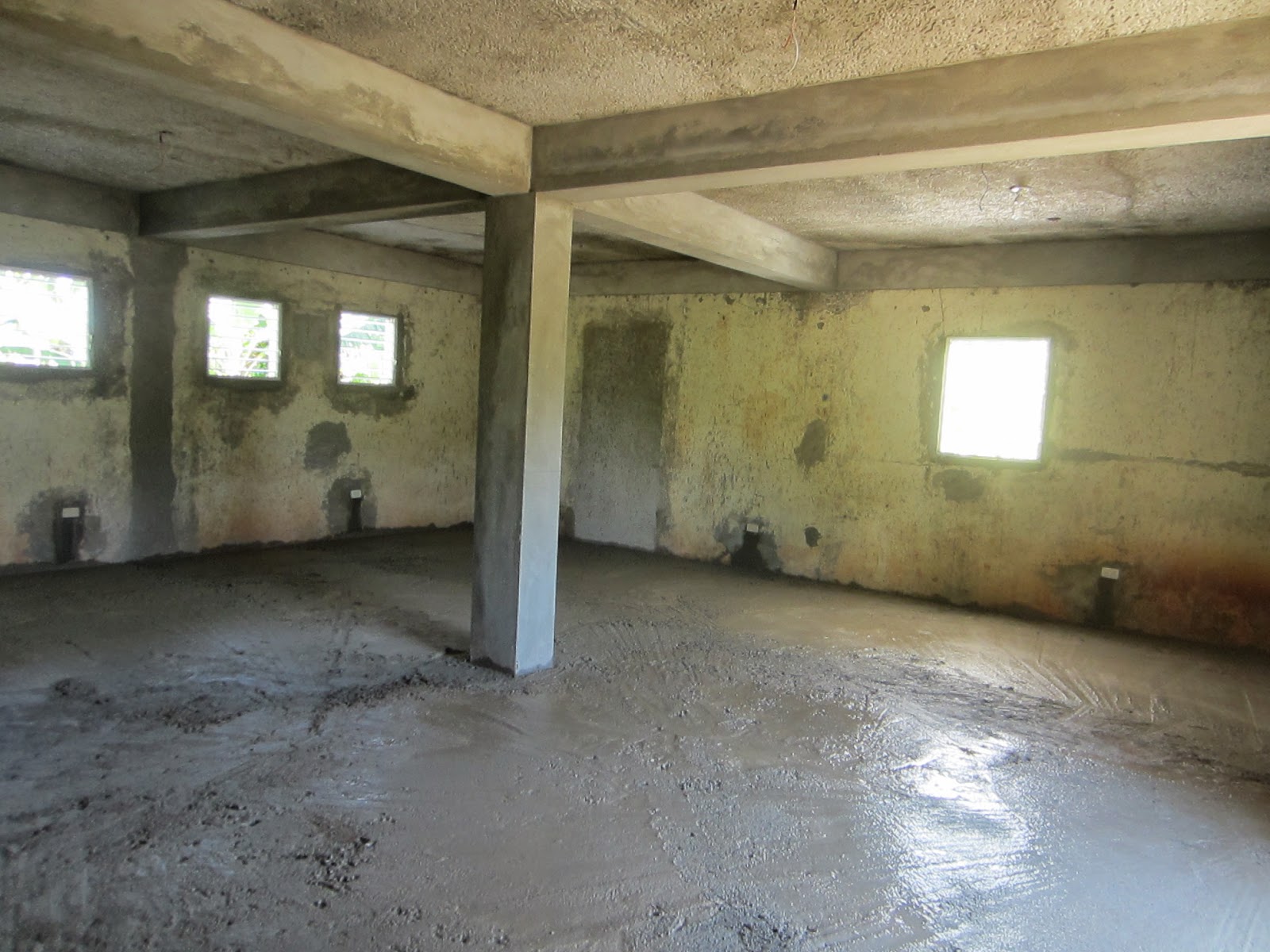
Library Update: The library now has a cement floor! We plan to install the floor tiles and paint over the next two weeks. Tentative inauguration date for the end of November. - It is time to start planning the celebration party!


Now it's time to make it look pretty!

October 20, 2014

Library Update

Since I arrived in my community, nearly a year and a half ago, I have been continuously working with my neighbors to build a library. This Saturday we turned the lights on, and the finish line is in sight. By the end of the month we plan to install flooring on one half, paint, and hassle the mayor for the doors he promised us. Next month we plan to have a big celebration party - you all are welcome to stop by. Many readers have helped us get to this point through donations and moral support. Thank you all so much!

This past week the library committee received a donation of 80 books from the Mid-West Medical Mission. The medical team spent the week in the Samaná hospital and stopped by my community to get a better understanding of how their patients live. The majority of books are textbooks, which have already been put to use by students researching breast cancer - October is Breast Cancer Awareness Month in the D.R. too. Thanks again to the whole team for dedicating a week of their time to helping the people of Samaná. It was a pleasure to act as a translator for you all.

Below are some before and after pictures of the library progress so far - keep us in your thoughts as we move on to the final stretch. Remember to check out more updates on the library website: http://bibliotecadelcoyote.blogspot.com/

The Library and Community Center - Before

The Library and Community Center - Now
Library - Before
Library - Now

Computer Lab - Before

Computer Lab - Now